The Case for Professional Application: What a Proportioner Does That a DIY Kit Can't
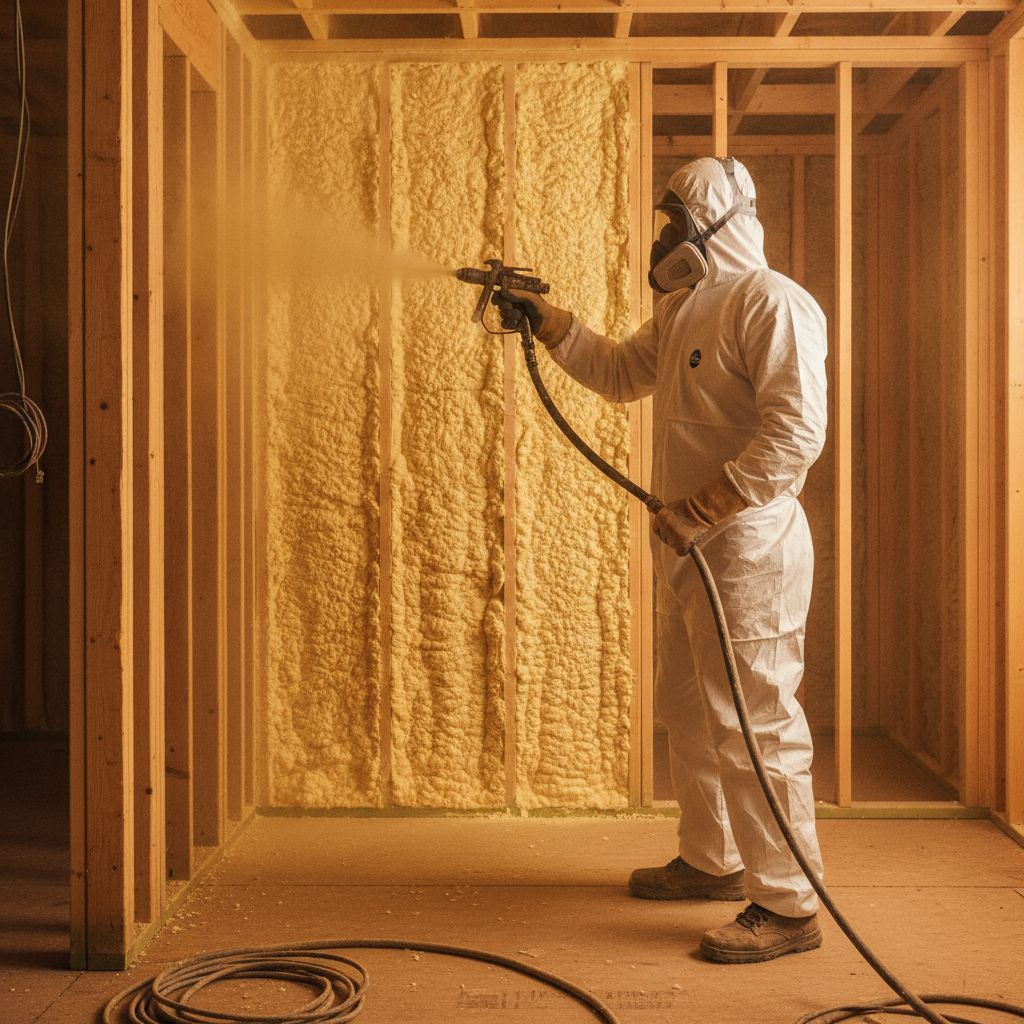
The chemistry inside a DIY spray foam kit is genuinely the same two-component polyurethane reaction a professional crew uses. The equipment delivering that chemistry is not the same, and the gap between the two is almost entirely about ratio control — a subject worth understanding in more mechanical detail than "professionals have better equipment."
What a Professional Proportioner Actually Does
A plural-component proportioner pumps the A-side and B-side components from separate drums through independently heated hoses, maintaining both components at a matched, precisely controlled temperature (commonly in the 120-140°F range for the hoses, though it varies by product) all the way to the spray gun. It also actively monitors and balances the pressure on both lines, correcting in real time for viscosity changes as ambient conditions shift over the course of a job. This is a continuously monitored system, not a one-time setup — a technician watches gauges and adjusts throughout the spray session.
What a DIY Kit's Cylinders Do Instead
A DIY kit's two pressurized cylinders are pre-charged to deliver a fixed ratio through the cylinder valve design, relying on the cylinder's internal pressure and the surrounding ambient temperature to keep both components at a workable, matched viscosity. There's no active heating, no real-time pressure correction, and no ongoing monitoring — the ratio delivered at the start of the cylinder and near the end, or on a 55°F morning versus an 80°F afternoon, can genuinely differ, because nothing in the kit's design compensates for that drift.
Why This Matters More as Job Size Increases
For a small job — sealing a rim joist, filling gaps around a few penetrations — even some ratio drift affects a small enough volume that the practical consequences are limited. Across a full attic or wall cavity, that same drift compounds over much more material, and the areas sprayed later in the cylinder (when internal pressure has dropped, or after the ambient temperature has shifted) are the most likely to show off-ratio symptoms — shrinkage, odor, or inconsistent cure — in a section of the job that's hard to inspect after the fact.
The Equipment Difference Is Also a Documentation Difference
Professional rigs typically log job data — pressure, temperature, material used — that a reputable installer can provide as documentation of a correctly executed application. That documentation is exactly what resolves the insurance and resale concerns discussed elsewhere on this site. A DIY kit produces no equivalent record, which is a real (if less discussed) practical downside beyond the chemistry itself.
Where This Leaves the DIY Decision
None of this means DIY kits are poorly made or that the chemistry is inferior — it means the equipment gap is real and matters more as the job gets bigger. Small, well-defined air-sealing tasks within the kit's rated temperature range remain a reasonable DIY project. Full cavities, roof decks, and anything where vapor control or structural performance depends on consistent application are worth the cost difference for professional equipment and its monitoring.
Compare DIY and professional application in full, or find a certified installer for jobs beyond small-scale air sealing.